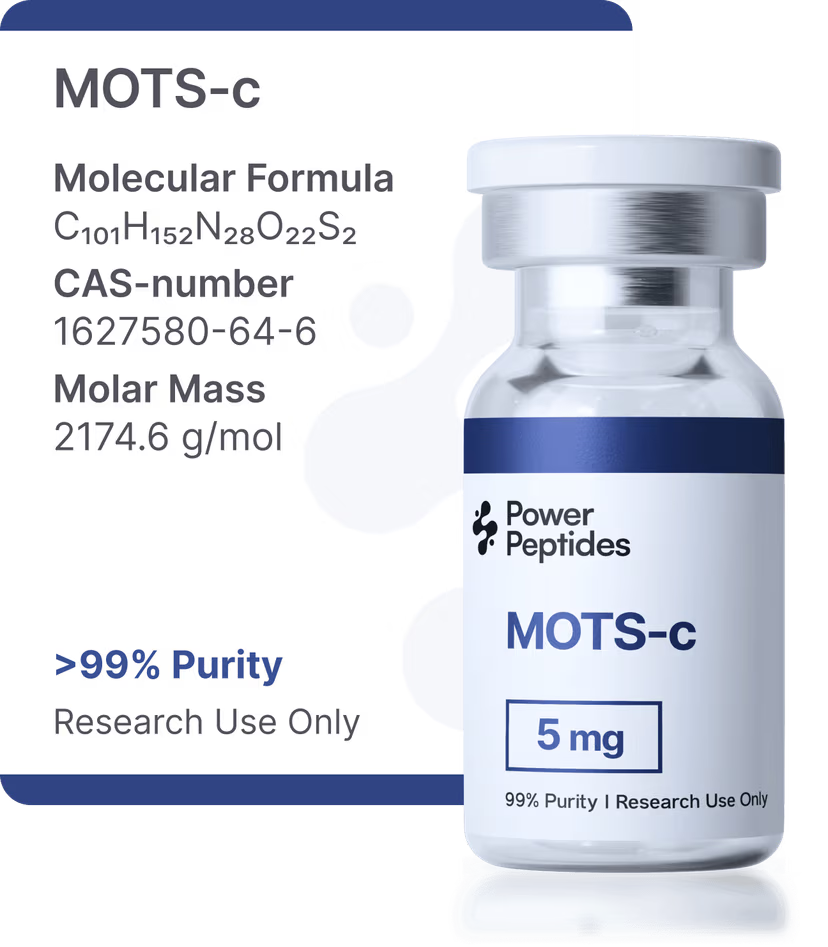
MOTS-c – Research Peptide
MOTS-c is a peptide associated with mitochondrial biology and has attracted interest in laboratory and preclinical research. Researchers have investigated MOTS-c in relation to molecular signaling, cellular processes, metabolic pathways, and mitochondrial function.
Power Peptides provides research-focused information about MOTS-c and other Research Peptides for legitimate laboratory, analytical, educational, and scientific applications. Our approach emphasizes clear product information, quality awareness, transparency, and responsible research practices.
This page provides general scientific information about MOTS-c and its research context. It does not provide medical advice, treatment recommendations, dosing information, administration instructions, or guidance for human or veterinary use.
What Is MOTS-c?
MOTS-c is a peptide encoded within the mitochondrial genome and has been investigated as part of research into mitochondrial biology and cellular signaling.
Researchers have studied MOTS-c in experimental models to better understand its molecular characteristics, biological interactions, and relationship with cellular pathways. Scientific investigations may examine peptide structure, stability, signaling behavior, analytical characteristics, and other measurable properties.
As with other Research Peptides, the interpretation of MOTS-c research depends on the experimental design, research model, controls, and methodology used in each study.
Power Peptides presents MOTS-c strictly as a research material and does not represent it as a medicine, supplement, or therapeutic product.
MOTS-c Research
Interest in MOTS-c research has expanded as scientists investigate the relationship between mitochondrial biology and cellular signaling. Research may examine how MOTS-c behaves under different experimental conditions and how its molecular characteristics can be evaluated.
Laboratory and preclinical studies may explore mitochondrial pathways, cellular responses, metabolic signaling, and other scientific questions. Such research can contribute to broader understanding of mitochondrial biology.
However, findings from laboratory or preclinical research should always be interpreted carefully. Experimental observations do not automatically establish safety, effectiveness, or suitability for human use.
Researchers should rely on peer-reviewed literature, validated laboratory methods, appropriate experimental controls, and qualified scientific expertise when evaluating MOTS-c research.
MOTS-c as a Research Peptide
Research peptides can be investigated for many scientific purposes. Depending on the research project, investigators may examine molecular structure, peptide stability, purity, cellular interactions, receptor-related processes, or analytical behavior.
MOTS-c may be relevant to research involving mitochondrial and cellular biology. The suitability of a specific research material depends on the objectives of the project, the laboratory methodology, and applicable institutional requirements.
Researchers should independently assess available product specifications and documentation before determining whether a particular MOTS-c material is appropriate for their scientific work.
Quality and Purity
Quality and consistency are important when evaluating laboratory research materials. Researchers may consider product identity, specifications, batch information, packaging, and available analytical documentation.
Power Peptides takes a quality-focused approach to the presentation of MOTS-c Research Peptides. Our objective is to provide clear information while avoiding unsupported medical, therapeutic, or performance claims.
Where documentation is available, researchers should review information associated with the specific product and batch. Independent analytical verification may also be appropriate depending on the laboratory’s requirements and the purpose of the research.
General website information should not replace product-specific documentation or appropriate scientific verification.
Product Documentation
Clear documentation can help researchers evaluate laboratory materials responsibly. Depending on the product, relevant information may include product identification, specifications, batch details, analytical characteristics, and other quality-related information.
Researchers evaluating MOTS-c should review the documentation associated with the specific material rather than relying solely on general descriptions.
Laboratories should also maintain suitable records according to their own quality-control and documentation procedures. Accurate recordkeeping can support material traceability and research reproducibility.
MOTS-c and Mitochondrial Research
Mitochondria play an important role in cellular biology, and their relationship with peptide signaling is an active area of scientific investigation. MOTS-c has therefore become a subject of interest in research examining mitochondrial and cellular pathways.
Researchers may use controlled experimental systems to investigate molecular characteristics and cellular responses associated with MOTS-c.
Scientific research in this area is complex, and results depend on experimental conditions and methodology. Findings from one research model may not necessarily apply to other models.
Power Peptides maintains a research-only approach and does not make medical claims regarding MOTS-c.
Research Consistency and Reproducibility
Reproducibility is a fundamental principle of scientific research. Researchers need accurate information about experimental materials to help ensure that results can be assessed and, where appropriate, repeated.
Consistency in product specifications, documentation, storage, labeling, and laboratory procedures can support responsible research practices.
For this reason, MOTS-c should be evaluated according to the same quality-conscious standards applied to other Research Peptides and laboratory compounds.
Power Peptides aims to support researchers through transparent product presentation, clear information, and dependable customer communication.
Responsible Laboratory Research
Responsible scientific research requires appropriate laboratory procedures, qualified personnel, suitable safety practices, and compliance with applicable regulations and institutional requirements.
Researchers considering MOTS c should independently determine whether the material is appropriate for their research objectives and whether its use is permitted within their laboratory or institution.
Relevant scientific literature, validated methodologies, and established research protocols should guide research planning.
Power Peptides does not provide instructions for human or veterinary administration and does not recommend MOTS c for medical or therapeutic purposes.
Storage and Handling
Research materials should be stored and handled according to applicable product documentation and established laboratory procedures.
Researchers should review product-specific information concerning storage conditions, packaging, labeling, expiration, and quality-control requirements. Laboratories should maintain suitable systems for identifying and documenting research materials.
If concerns arise regarding packaging integrity, labeling, or product condition, researchers should follow their laboratory’s established quality and safety procedures.
Storage and handling requirements can vary between materials, so researchers should rely on the documentation associated with the specific product.
Power Peptides Research Standards
Power Peptides is committed to providing research-focused materials supported by clear information, quality awareness, transparency, and dependable customer service.
Our MOTS c Research Peptides are presented strictly within a laboratory and scientific research context. We do not position research materials as consumer health products or therapeutic solutions.
We encourage researchers to consult qualified scientific professionals, relevant literature, and institutional protocols when planning research involving MOTS-c or other peptide materials.
MOTS-c and Scientific Investigation
MOTS c remains a subject of scientific interest within mitochondrial and cellular research. Continued investigation may help researchers characterize its molecular properties and better understand experimental observations involving mitochondrial signaling.
It is important to distinguish scientific investigation from medical application. Research findings do not automatically establish that a compound is safe, effective, or appropriate for human use.
Power Peptides therefore maintains a strict research-only position for MOTS-c and other Research Peptides.
Research Use Only
All products supplied by Power Peptides are intended strictly for laboratory, analytical, educational, and scientific research purposes only. MOTS c is not intended for human or veterinary consumption, self-administration, medical use, or therapeutic application.
The information provided on this page is general and should not be interpreted as medical advice, treatment guidance, or instructions for use. Researchers are responsible for complying with applicable laws, regulations, institutional requirements, laboratory safety procedures, and scientific standards.
Power Peptides — Research-focused materials, transparent information, and responsible laboratory supply.

Reviews
There are no reviews yet.