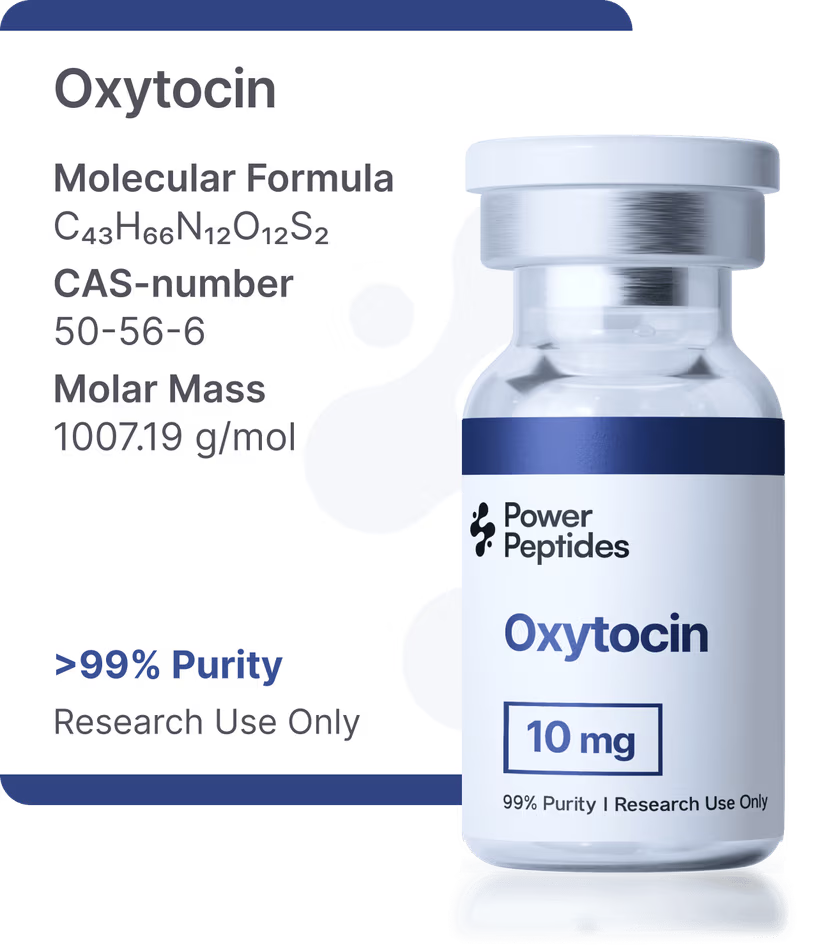
Oxytocin – Research Peptide
Oxytocin is a naturally occurring peptide hormone that has been extensively investigated in biological, molecular, and laboratory research. It is produced naturally in the body and is associated with a range of physiological signaling processes. Because of its well-characterized molecular and receptor-related properties, oxytocin continues to be an important subject of scientific investigation.
Power Peptides provides research-focused information about Oxytocin Research Peptides and related laboratory materials for legitimate scientific, analytical, educational, and research applications. Our approach emphasizes transparency, quality awareness, clear information, and responsible research practices.
This page provides general scientific background about oxytocin. It is not medical advice and does not provide dosing information, administration instructions, treatment recommendations, or guidance for human or veterinary use.
What Is Oxytocin?
Oxytocin is a naturally occurring peptide hormone consisting of nine amino acids. It is synthesized in the hypothalamus and released through the posterior pituitary. Scientists have studied oxytocin extensively because of its interactions with specific receptors and its role in several physiological signaling pathways.
In laboratory research, oxytocin can be examined in relation to molecular structure, receptor binding, peptide stability, signaling mechanisms, and other measurable characteristics.
As with other Research Peptides, scientific findings involving oxytocin must be evaluated according to the experimental model, methodology, controls, and conditions used in each investigation.
Power Peptides presents oxytocin research materials strictly within a laboratory and scientific research context.
Oxytocin Research
Oxytocin research covers a broad range of scientific topics. Researchers have investigated its receptor interactions, cellular signaling, molecular characteristics, and physiological pathways.
Scientific studies may use biochemical, molecular, cellular, or other laboratory approaches to examine how oxytocin interacts with experimental systems. Research can also investigate how changes in experimental conditions influence peptide behavior or receptor-related activity.
The interpretation of research findings requires careful consideration of study design and limitations. Results observed in laboratory or preclinical research should not automatically be interpreted as evidence of safety, effectiveness, or suitability for human use.
Researchers should consult appropriate scientific literature, validated analytical methods, and qualified scientific professionals when evaluating oxytocin-related research.
Oxytocin as a Research Peptide
Research peptides can be investigated for many different scientific purposes. Depending on the research objective, investigators may evaluate molecular structure, purity, stability, receptor interactions, analytical characteristics, and other measurable properties.
Oxytocin may be relevant to research involving peptide hormones, receptor biology, molecular signaling, and related scientific fields.
The suitability of a particular oxytocin research material depends on the specific research project and laboratory requirements. Researchers should independently evaluate product specifications and available documentation before determining whether a material is appropriate for their work.
Quality and Purity Considerations
Quality and consistency are important when evaluating laboratory research materials. Researchers may consider product identity, specifications, batch information, packaging, and available analytical documentation.
Power Peptides takes a quality-focused approach to the presentation of Oxytocin Research Peptides. Our goal is to provide clear and responsible information without making unsupported medical or therapeutic claims.
Where product documentation is available, researchers should carefully review information associated with the specific product and batch. Independent analytical verification may also be appropriate depending on the requirements of the laboratory or research project.
General website information should not replace product-specific documentation or appropriate scientific verification.
Product Documentation
Clear documentation can help researchers evaluate laboratory materials responsibly. Depending on the product, relevant information may include product identification, specifications, batch details, analytical characteristics, and other quality-related information.
Researchers evaluating it should rely on product-specific documentation rather than general descriptions alone.
Laboratories should also maintain appropriate records according to their internal quality-control procedures. Good documentation practices can support material traceability, consistency, and research reproducibility.
Oxytocin and Receptor Research
It interacts with the oxytocin receptor, a receptor that has been investigated extensively in molecular and physiological research.
Scientists may study receptor-related signaling using controlled laboratory systems to better understand molecular interactions and cellular responses. Such research can contribute to broader scientific understanding of peptide hormones and receptor biology.
However, research findings are dependent on experimental conditions. Observations from one model cannot necessarily be generalized to other systems.
Power Peptides therefore maintains a research-only approach and does not make claims regarding medical outcomes or therapeutic applications.
Research Consistency and Reproducibility
Reproducibility is an important principle in scientific research. Researchers need accurate information about experimental materials to help evaluate results and, where appropriate, reproduce research conditions.
Consistency in product specifications, documentation, storage, labeling, and laboratory procedures can support reliable scientific work.
For this reason, it should be evaluated according to the same quality-conscious standards applied to other laboratory materials and Research Peptides.
Power Peptides aims to support researchers through transparent product presentation, clear information, and dependable customer communication.
Responsible Laboratory Research
Responsible scientific research requires suitable laboratory procedures, qualified personnel, appropriate safety practices, and compliance with applicable regulations and institutional requirements.
Researchers considering oxytocin for laboratory research should independently determine whether the material is appropriate for their scientific objectives and whether its use is permitted within their laboratory or institution.
Relevant scientific literature, validated methodologies, and established research protocols should guide experimental planning.
Power Peptides does not provide instructions for human or veterinary administration and does not recommend oxytocin for medical or therapeutic purposes.
Storage and Handling
Research materials should be stored and handled according to applicable product documentation and established laboratory procedures.
Researchers should review product-specific information regarding storage conditions, packaging, labeling, expiration, and quality-control requirements. Laboratories should maintain suitable systems for identifying and documenting research materials.
If concerns arise regarding packaging integrity, labeling, or product condition, researchers should follow their laboratory’s established quality and safety procedures.
Storage and handling requirements may differ between products, so researchers should rely on documentation associated with the specific material.
Power Peptides Research Standards
Power Peptides is committed to providing research-focused materials supported by clear information, quality awareness, transparency, and dependable customer service.
Our Oxytocin Research Peptides are presented strictly within a laboratory and scientific research context. We do not position research materials as consumer health products or therapeutic solutions.
We encourage researchers to consult qualified scientific professionals, relevant literature, and institutional protocols when planning research involving oxytocin or other peptide materials.
Oxytocin and Scientific Investigation
It remains an important subject of scientific investigation because of its molecular structure, receptor interactions, and biological signaling characteristics.
Continued research can help scientists better understand peptide hormones and their interactions within experimental systems. However, scientific investigation should always be distinguished from medical application.
Research findings do not automatically establish that a compound is safe, effective, or appropriate for human use. Power Peptides therefore maintains a strict research-only position for oxytocin and other Research Peptides.
Research Use Only
All products supplied by Power Peptides are intended strictly for laboratory, analytical, educational, and scientific research purposes only. It research materials are not intended for human or veterinary consumption, self-administration, medical use, or therapeutic application.
The information presented on this page is general and should not be interpreted as medical advice, treatment guidance, or instructions for use. Researchers are responsible for complying with applicable laws, regulations, institutional requirements, laboratory safety procedures, and scientific standards.
Power Peptides — Research-focused materials, transparent information, and responsible laboratory supply.



Reviews
There are no reviews yet.